Translate

Showing posts with label Permaculture Spotlight. Show all posts

Friday, June 24, 2016

Beyond Sustainability

Thought we would share the article published today in the Tallahassee Democrat about Permaculture as well as some of the pictures that were submitted but not printed.  If you haven't been to Lululand lately, you must see the progress Anna has made in the last year.  It's amazing!!

Cob experiment at Lululand

Cob  workshop


Chicken and duck enclosure
 

Chickens enjoying bench made from water trough


Grape arbor at Lululand
 
Living roof on fowl shelter at Lululand
Regine's rain barrels


Touring Regine's gardens

Hugelkultur at Lululand


Friday, August 15, 2014

Regine's Report on her North Carolina garden, perennial crops, cover crops, and water catchment


Regine Maligne has been garderning during she and Tim's summer sojourn to North Carolina.   They have now gone on to France to spend time with Regine's mother but she has shared with us what she has learned this summer about gardening in a challenging location.   See Regine's notes on cover crops, water catchment, etc. 
 
Regine also furnished a copy to our teacher and inspiration, Anna Lee, who had the following comments to add:
 
"I was fortunate to have a few days to visit Regine and Tim at their vacation home near Franklin, NC in late July.  I had seen pictures of the garden Regine had been working on for two summers before and was tickled at her irresistible inner drive to garden no matter what the circumstances and obstacles. 

In this case, part of the problem is that she is there for so little time (and in and out during that short time!) that one might wonder if it is worth the trouble to set up a garden which will only be able to yield for a limited time before having to leave until the next summer.  The mountains are very shady, steep in slope, and have different temperature ranges than that of Tallahassee.  Not many people have gardens in the neighborhood because of this and also because some of them aren't there year round.  Regine, a natural permaculturist, has turned the "problem into a solution" in several ways:  

When some dying trees had to be removed she immediately saw the opportunity to use the increased sunlight in a very shady environment.  The large stumps that were left nearly level to the ground are now fine "stepping stones" in the landscape.

When some soil needed to be moved alongside the house, her neighbor who was removing it added it to the very steep edge of a ravine on the opposite side of the house and this gave more garden space than possible to use before.

She has learned to bring some seedlings with her to give them a head start rather than starting everything from seed.  

She is closely watching what plants grow best and fastest in this mountain setting so as to gain the most in the least time.
 
She has figured out how to cover crop and then leave this mulched to enrich the soil for the next year and is experimenting with different cover crops.  

She has connected with her neighbors to let them know the bounty of food left for them to come enjoy which gives her pleasure and community connection.

She has set up different types of beds with some in more shady areas and some raised to hip level which give her access from her deck and offer different micro-climates to experiment with.

She is planting perennials like blueberry into the landscape.

She has brought in various native flowers and plants to become permanent members of her garden family.

She has utilized space that was allowing water to run on one side of the house to create beds to catch and store this water.

She reconfigured her initial beds into a "fish scale" pattern to better utilize the slope and provide better water catch. 

She took roof top runoff and captures it in a big garbage can to gravity feed this rainwater to the garden and is planning more ways to utilize this.

But what the pictures and drawings cannot tell you is something I was able to observe and enjoy while there.  Each morning Regine goes out to her garden and visits her plant friends. She picks greens for her morning green smoothie and herbs for her tea.  She gains such pleasure and healthful benefits from this morning connection with her garden.  It is a beautiful thing to see.

So you can see how many ways Regine's intelligent observation and reflection has continued to not only grow her summer garden but  also to grow her understanding and appreciation of her mountain home.  The permaculture admonition of "obtain a yield" is well used here in so many ways!  What isn't always stated in permaculture terms is what Love can do in the whole scheme of things which is well demonstrated by Regine.

Anna Lee"

Friday, July 4, 2014

Spotlight on Cap'n Dave

It all started with an email about bunnies.  Permaculture graduate Cap'n Dave emailed from his "park" in South Leon County that he had an overabundance of bunnies and I, in a moment of madness, decided raising bunnies might be a great idea since I had recently had two great rabbit meals and I could use the rabbit pellets to fertilize my garden.   Dave invited me over to view the bunnies and to pick some blueberries.

Luckily, I regained my sanity and visited the bunnies (beautiful, healthy bunnies, and two litters (is that right) of baby bunnies, but didn't take any home.   I did pick some blueberries.  While there, I had a chance to talk to Dave and view his beautiful 6-acre spread which he has been nurturing and improving for 20 years.

Nestled in a pine forest, Dave's property was covered with wild blueberry bushes when he acquired it.  In fact, folks from the Woodville area had been coming there for years to pick blueberries.  In the ensuing years, the blueberry bushes have thrived.   Wild blueberries are smaller and sweeter than cultivated berries, and Dave has a bumper crop this year.  He invites his permie friends to give him a call and come for a blueberry picking visit.

In addition to blueberries, there are many other types of native and exotic fruits scattered throughout the property in a food forest amongst Hugelkultur and raised-bed vegetable gardens, chicken and rabbit pens, and places to walk and relax and enjoy the abundance.  There are moss-covered paths throughout the property that feel like walking on velvet, leading to different zones of his homestead.

Dave is not a survivalist, but he does believe in preparedness and is a student of what it takes to support an individual or a family in the event of a disaster, natural or otherwise, temporary or otherwise. A visit with him always leaves you with new information and enthusiasm in the effort to provide for your own needs as much as possible, whether in the event of disaster, or day to day.


Wild Blueberries
 

One of two sinkholes on Dave's property.
This one with a screened gazebo and
comfortable chairs for maximum viewing enjoyment

Hugelkultur beds ready for Fall crops
interplanted with many fruit trees


Sunday, April 13, 2014

Permaculture Site Visits and a Mini-Permablitz

All things Squash
The 2014 Permaculture Class from the IFAS Extension spent a busy day last Friday visiting two permaculture gardens and learning from the gardeners.  Several graduates of previous permaculture classes joined them.  The first site, Betton Hills Community Garden, is a public garden organized under the City of Tallahassee Community Gardening Program.  Located at the edge of McCord Park on Cline Street, it is a peaceful, well-maintained spot in the middle of the Betton Hills neighborhood.  Among the topics of discussion was a presentation on the various types of squash and the benefits of saving seeds to produce new varieties in a changing world.
Betton Hills Community Garden

Thursday, October 3, 2013

Spotlight on Greg Jubinsky

Greg Jubinsky works in his garden near Havana

The Havana Herald did a good job of spotlighting Permaculture Designer Greg Jubinsky and his wife Mil this past July.  Enjoy this article about one of our "Permies."

Local Farm Grows Certified Naturally Grown Produce

By Sandi Beare
Herald Correspondent
                                         
Tucked away, far deep in the heavy, moist woods of a typical Southern forest, lies a natural beauty, where one couple’s vision has taken root. Ragged Glory farm near Havana, where Greg and Mil Jubinsky live, thrives on land that was once part of the Nicholson family history.

Farmer Greg worked with Florida’s Department of Environmental Protection (DEP) in the Invasive Plant Species section for 27 years before retiring last August. He used to share good plant practices with landowners; now he and Mil use them on their own chemical-free farm. In all, Greg spent some 35 years working for the State of Florida.

Wife Mil continues to work at the Florida Division of State Lands, as Office Manager, and known as ‘Fixer-of-All-Things-Needing Attention’ and where she has worked for 27 years.

When asked how the farm came into being, Jubinsky says he’s always had a vegetable garden. “We realized seven or eight years ago when we moved into our (newly-built) house that we wanted the whole deal,” he said. They became certified-naturally grown (CNG) in 2007.

Mil, besides taking care of the duo’s chickens, has her own potager garden and also serves as Greg’s self-described ‘anchor.’ Along the way, Mil has taken up the quilling craft, making beautiful jewelry from the fine art of paper-folding. She’s also painting in a style all of her own, both of which she sells at events, markets, and online with her two sisters on Etsy.com.

Greg has been the inspiration behind Havana’s newest agribusiness, the Havana Growers Market, which meets Saturdays from 10 a.m. to 2 p.m., rain or shine.

Several area certified-naturally grown farmers sell their squash, eggplant, peppers, onions and other seasonal vegetables at the market. One local beekeeper brings honey harvested according to CNG principles. Others offer for sale baked goods made from the chemical-free vegetables. Participating so far are Ragged Glory Farm, Johnnie's Garden, Silver Rain Farm, Mac's honey, and Canopy Rose.

“There’s a small difference between being ‘organic’ and ‘certified-naturally grown,’” says Jubinsky. “With organics, the government (U.S. Department of Agriculture) only lets you grow and sell one specific crop from a single farm,” he adds, saying to be certified organic is vastly more expensive, too.

Greg talking to customers at Havana Growers Market
“The CNG tag has the same principles - making the farm more sustainable, not using non-organic approved (chemicals, sprays, etc.). CNGs adhere to those principles while giving farmers more options of what to plant and what to sell,” Greg says.

“With organics, you can only grow the one crop in straight rows,” he says about how he often plants lower plants in between trellises of climbing vegetables like peas, beans and the like.

All of his vegetables are from gulf-coast environmental plants that are heirloom, or passed down through the generations or through friends to others.

“You need to have open plants to bring in the pollinators, the bees and butterflies. I plant the perimeter with native flowering perennials. The squash are doing very well. We focus on quality, rather than quantity. These are purple-pod okra from Louisiana. This is a native bean - the seed came from a friend, David Tarver,” says Jubinsky as he tried to entice me with the pretty color and pitch for the taste of the unusual okra.

Tarver gave him the bean seed that his grandmother had gotten from an itinerant preacher who needed a place to stay. The seeds have thrived through many generations going back around 200 years, he said.

Farming is not easy work, and you can see that by looking at the wide variety of the Jubinsky crops. The older he gets, he says, he’s growing more plants on trellises, which means he doesn’t have to spend all day weeding at ground level. The couple has participated in the annual New Leaf Market naturally-grown farm tours for the past two years, and plan to be part of it again this Fall.

Stop by Havana’s fountain/stage area Saturdays from 10 a.m. to 2 p.m. to see the vibrant colors that chemically-free, home-grown vegetables have, and pick up a taste of Havana!

Wednesday, October 2, 2013

Garden Travelogue from France - More from Regine

Histoires de jardinage

Hello friends,

We are back in the South of France.

I spent the last week gardening with Martine (her sister)  while Christian and Tim went hiking on the Saint Jacques trail.  Martine's New Garden   Mathilda's Garden

I am now back home with my mother and it is great to be with her again after visiting France and friends and spending great time with my cousin and wife. What a rich life we have indeed.

Here are some photos of gardening adventures and Tim'slatest photos - he finished today his 6 days hiking in France and Spain.

Hug and see you all in Nov!

Regine

Saturday, August 24, 2013

Update from Regine in France


We have an update from Regine in France where she and Tim are spending time with Regine's mother, and putting her Permaculture skills to work in her Mother's garden.  She has included one of her wonderful picture collages of her Mother's garden and one of a hike in the Pyrenees, so don't neglect to click on the links.


"Dear friends,
 
We have now settled on the other side of the Atlantic. It is great
being with my mother who is so full of energy (84 y old), taking care of
cats, garden , flowers and us!  We are now the kids and we have someone
to tell us what to do  :-)

   We are now ready for the village fiesta this WE then a week in Britany
with cousins.  The good life.  We are fit and just as well - hiked 6
miles with the village walking club last Tuesday then 5h
walk in the mountains the next day.  We feel very fortunate!

   Nice to reconnect with life in the village, family and friends.  I
enjoy cycling through town with all these people using bicycles!
                                                                 Regine"


Sunday, August 4, 2013

Spotlight on -- Sissy Taylor-Maloy


Siss Taylor-Maloy in her spiral garden

Permaculture Designer Sissy Taylor-Maloy feels a close connection to the earth, particularly where she and her husband, Noah Maloy, live and work on their 80-acre family farm in Southwest Jefferson County, Florida.   Their home sits right in the middle of what was formerly the 1800s settlement of Delph, now known as Fanlew.  Delph was named for its postmaster, Warren Delph.  It was a logging town in its heyday, a thriving town with two railroad lines, saw mills and turpentine stills, a boarding house, churches, and many small shanty shacks lining the dirt roads.  The people lived hard off the land and the Maloy/Grantham family made a living free ranging cows and hogs, farming, and they ran the local country store.
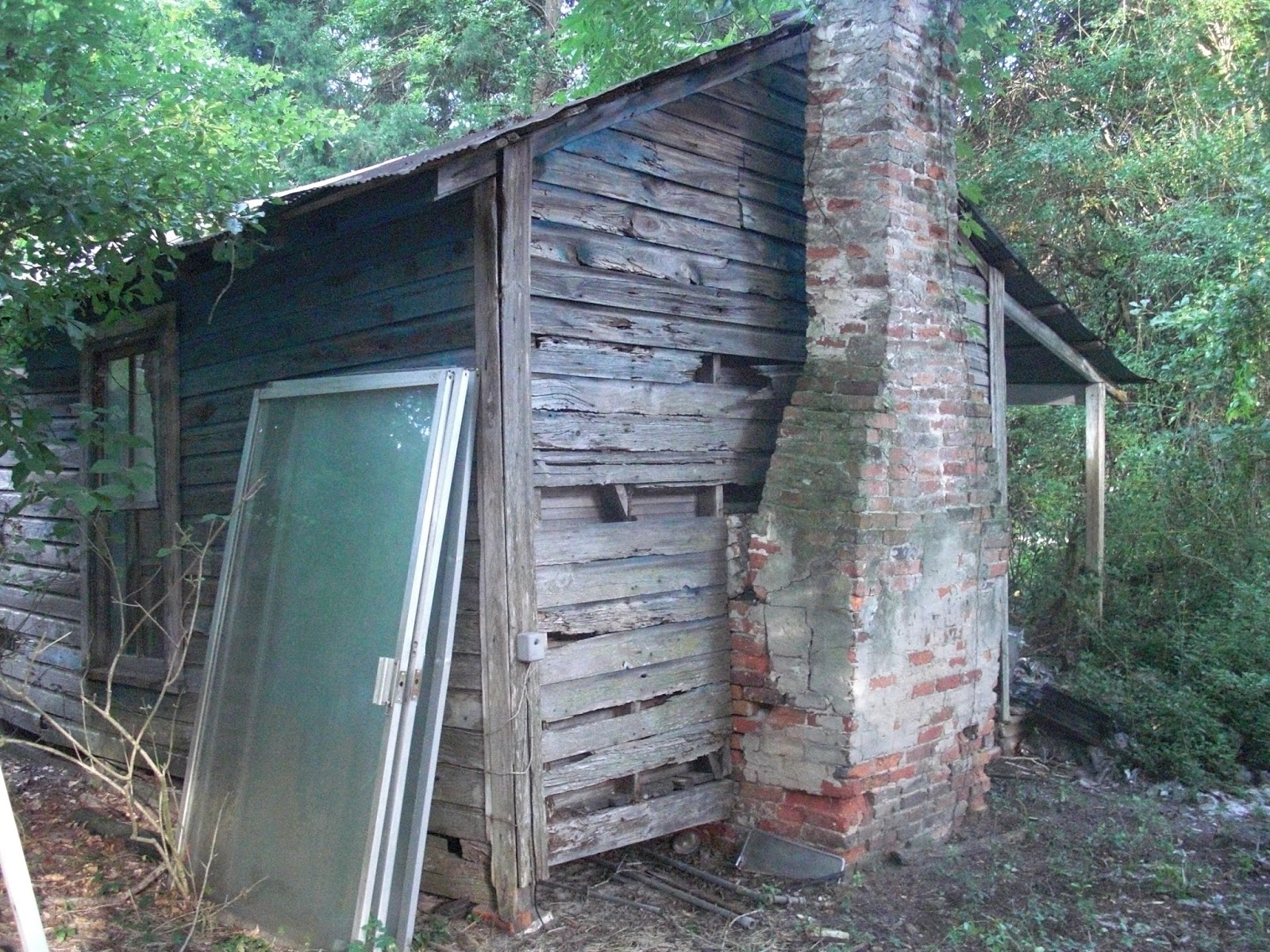
Remains of 1905 homestead

Noah’s family has lived in the area for over 150 years, and the remains of his grandparents’ old homestead (1905) and the little country store they operated are in the middle of Sissy and Noah's homestead. The country store also sold gasoline and kerosene. Noah's Grandmother had the second gas station in Jefferson County and sold under the Sinclair brand.

Sunday, July 21, 2013

Spotlight on -- Regine Maligne-Lynch

Meet Regine Maligne-Lynch, Certified Permaculture Designer, and graduate of the 2013 Permaculture Course at the Leon County Extension, IFAS:
 
Regine, tell us a little about yourself.
 
I grew up in France - my great grand parents were farmers. I have wonderful childhood memories  of eating  fruits, nuts , berries, grapes, artichokes in my grand parents yard... Every house in my village had a vegetable garden and my mother at 84 still grows vegetables.  

I studied engineering  - electronics and computer science - and spent 18 years in London, England. I worked in the Telecom industry in software development then Marketing and training of sales people.  I enjoyed finding ways to explain simply complicated matters...

My first vegetable garden and green house in London were a delight - I still remember the huge vegetables I grew the first year.  Year 2 was not so good:  I still had no clue about enriching the soil...  I moved to Atlanta Georgia with my work in 2000. My first vegetable garden attempt there was a disaster - I had no clue about the hard clay soil.  Nine years later in Tallahassee, I used mushroom compost (on a friend’s advice) with great results. Great to have friends to point us to the right direction!

How did you get interested in permaculture?

A gardening friend took me to the introductory talk and something clicked then: Learning about soil, water, plants, bugs, natural building material, being with like minded people really attracted me. At this stage, I had rain barrels, compost piles, a vegetable garden and was not sure where to go next with my edible landscape idea. Now I feel my horizon has expanded so much that I see no end to where I am going!


Tuesday, June 25, 2013

Spotlight on Permaculture Projects in and around Tallahassee

Tallahassee has a full complement of green organizations and projects, both under the umbrella of government and in the non-profit arena.  As these continue to develop, we will all benefit from them.

Those practicing permaculture design, while not an organized movement at this point, are a part of the overall effort to create a more resilient future in our area.  While many of the sustainability strategies and campaigns have a wide reach, those practicing permaculture tend to focus on a specific place or parcel of land, whether a home site, or a park, a business, or some other distinct location.

Coming up soon on this Blog is a series of Spotlights on people who are practicing Permaculture Design and their projects, either on their own property, or at some other public or private location.   We will be including interviews and photos so we can learn from each other's efforts. 

Permaculture projects are not something like a new roof that you can install and then walk away.  Permaculture is a process of observing the specific site or habitat, planning, designing, and creating methods and projects to more closely conform to nature's patterns, continuing to observe, adjusting, planning, experimenting, and on and on.  As conditions change, so must the permaculture design.  Our goal is to capture and conserve water and energy, utilizing all the possibilities on our specific site to become self-sufficient, and to do so in a manner that will build the soil, increase fertility, produce no waste, and protect the natural resources available to us.